Patient Carer Advice Line: 01924 950950

Some patients may experience open wounds. The aim of this page is to assist and inform patients, via a variety of solutions as to how fungating wounds may be treated.
Open wounds can present as a fungating ulcer which results from the cancer breaking through the overlying skin and may appear as a crater-like wound, or a sprouting fungus/cauliflower-like lesion. This can occur in the face and neck and can present with problems.

These open wounds can be distressful to cancer patients as it can be associated with pain, discharge, bleeding, itching, malodour and psychological issues.
As well as open wounds some patients might experience Lymphoedema, which is a build up of lymph fluid that causes swelling in a part of the body.

Dental nurse Katie Caines came face-to-face with Mouth Cancer when her own father was diagnosed. She was involved in his journey from the early detection of the mouth cancer and was there until the end when he sadly passed away in February 2019. Katie’s Dad really struggled with open wounds following his treatment. This video highlights his story.


Specialist help is needed in managing the open wounds successfully. Advice can be initiated by the local oral and maxillofacial team managing the mouth cancer with input from the Dressing Nurses, Tissue Viability Nurses, Macmillan Cancer Nurses, Practice Nurses and District Nurses.

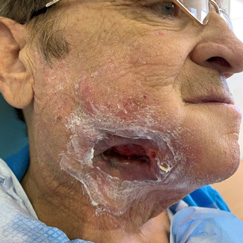
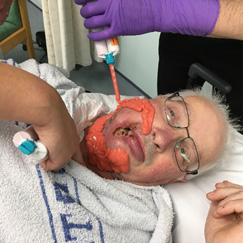
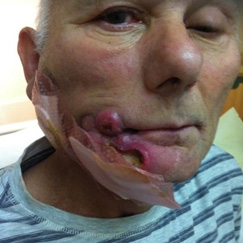
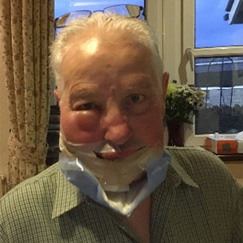
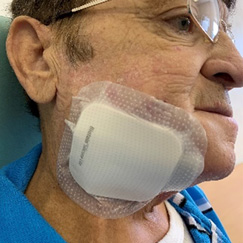
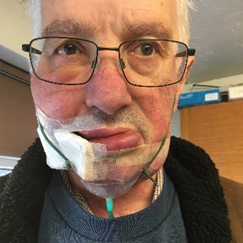
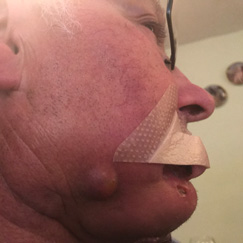
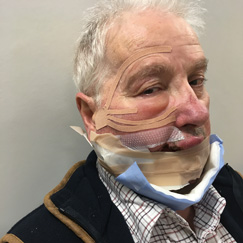
There are a variety of dressings to choose from such as foam dressings, moulds, absorbent dressings and vacuum suction options. The face and neck area can be a bit awkward to secure the dressings effectively. Your specialist nurse or tissue viability team can help choose the most suitable dressing.
Absorbent dressings can be used in wounds that have a lot of discharge such as foam dressings, soft silicone dressings and super absorbent dressings.
Alginate dressings made from seaweed can absorb moisture and turn into a soft gel. There are also dressings which can help reduce the skin damage from regular dressing changes.
Unpleasant smell coming from the wound can be dressed with charcoal backed dressings which can trap the malodour.
Honey dressings and silver dressings help to fight the bacteria which can cause the smell.
Sometimes, the doctor can prescribe you with antibiotics such as metronidazole to kill off the malodour producing bacteria.
Compression treatment reduces swelling by putting pressure on the area. There are different ways to apply compression including bandaging and garments. For more information on treating lymphoedema visit Compression treatment for lymphoedema | Coping with cancer | Cancer Research UK

Addressing the psychological needs of patients who have chronic or acute wounds presents a daily challenge to clinicians. Patients may not be willing to admit the degree to which they are affected by such a visibly open wound, which can have a huge impact on a person’s psyche, particularly if it also affects their ability to perform everyday tasks. Patients may struggle to come to terms with the pain, altered body image and adjustment may take time.
Family, friends and the medical profession can support patients through warmth, empathy, acceptance and by helping them to face reality. Grieving may also form part of an individual’s response to a wound.

The following pathways show who you may be able to refer to for further help once you have been discharged from hospital.


For further information click on the logos below.



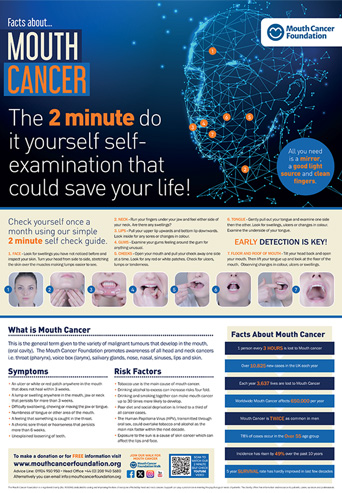
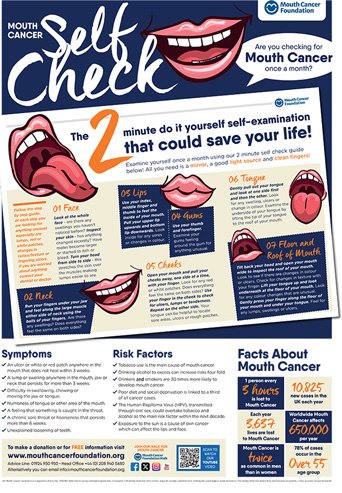
Download a variety of free leaflets, posters and educational resources.
The Mouth Cancer Foundation website aims to assist patients, carers and health professionals find information on head and neck cancers easily. It provides direct links to the relevant sections of existing cancer...
Read More








 MOUTHCANCER